

Guide
Trash Bag Sizes Guide: What Size Do You Need?
Trash bag sizes by gallon, with a bag dimensions chart, how to measure your can and mil vs micron thickness. Pick the right can liner fast.

In this guide
- Trash bag size chart: gallons and bag dimensions
- How to measure your can for the right trash bag size
- Kitchen trash bag sizes (13 gal), office and desk sizes
- Commercial can liners: 33 to 60 gal
- Trash bag thickness: mil vs micron, high-density vs low-density
- Can liner vs trash bag, drawstring vs flat, and how many per case
- Stocking tips for a facility
- Our picks by size
- Shop the products in this guide
Quick answer: The most common trash bag sizes are 4, 13, 33, 45 and 55-60 gallons. Match the gallons to your can, then confirm the width x length in inches.
- 4 gal (about 17 x 18 in): small bath and desk bins
- 13 gal (about 24 x 27 to 24 x 33 in): tall kitchen cans
- 33 gal (about 33 x 39 in): standard office and janitorial cans
- 45 gal (about 40 x 46 to 40 x 48 in): large indoor and outdoor cans
- 55-60 gal (about 38 x 58 or 42 x 48 in): large rolling cans and drums
Choosing between trash bag sizes comes down to two numbers: the gallon rating of the can and the bag width and length in inches. Gallons get you to the right family; dimensions confirm the fit. This guide is for office and facility managers, janitorial crews, kitchen managers and anyone ordering liners by the case. Everything below is general sizing information, and every product mentioned is in the Can Liners collection.
Shop the 6 products in this guide
Trash bag size chart: gallons and bag dimensions
Dimensions below are common industry ranges for flat (folded) bag width x length in inches. Makers vary by an inch or two and sometimes label the same bag with a different gallon number, so use the table to narrow down and the product page to confirm.
| Size (gal) | Typical bag size (W x L, in) | Typical can or use |
|---|---|---|
| 4 | about 17 x 18 | Bathroom, small desk bin |
| 7-10 | about 24 x 24 | Under-desk bin, 5 gal pail |
| 12-16 (13 gal tall kitchen) | about 24 x 27 to 24 x 33 | Kitchen can, break room, office |
| 20-30 | about 26 x 36 to 30 x 36 | Mid-size office and lobby cans |
| 33 | about 33 x 39 | Standard 32-33 gal can |
| 40-45 | about 40 x 46 to 40 x 48 | Large indoor and outdoor cans |
| 55-60 | about 38 x 58 or 42 x 48 | Large rolling cans, dumpster liners |
The sizes we stock include a Glad 78902 13 gal bag at 24 x 27 in, an ECOSAFE-6400 HB3339-8 at 33 x 39 in and a Mint-X MX3858XHB 60 gal bag at 38 x 58 in.
How to measure your can for the right trash bag size
Gallons printed on a can are a starting point. Cans are tapered, have molded rims and sometimes carry a rated capacity that differs from the label, so a tape measure is more reliable. You need three measurements.
- Circumference. Wrap a soft tape around the widest part of the can, in inches.
- Height. Measure from the floor to the top rim.
- Bottom diameter. Measure straight across the base.
Then apply two formulas:
- Bag width (flat) = circumference divided by 2. This lets the bag wrap fully around the can.
- Bag length = height + half the bottom diameter + 4 in overhang. The half diameter covers the bag bottom folding into the base. The overhang lets you fold the bag over the rim so it stays put.
Worked example. A round can measures 18 in across the base, 24 in tall and has a circumference of about 56.5 in (18 x 3.14). Width is 56.5 / 2 = 28.3 in. Length is 24 + 9 + 4 = 37 in. You need a bag at least about 28 x 37 in, so a 30 x 37 in or 30 x 38 in liner is the closest standard fit.
Square and rectangular cans. Add the length and depth of the base, which is the same as half the perimeter. A 14 in x 10 in base gives a width of 24 in. Use half the diagonal of the base in the length formula (a 14 x 10 in base has a diagonal of about 17 in, so add about 8.5 in). Slim cans often need a bag wider than they look because the film gathers at the corners.
A bag a few inches too long folds over the rim easily. A bag a few inches too short slides into the can the first time someone presses down, so when in doubt, size up.
Kitchen trash bag sizes (13 gal), office and desk sizes
What are standard kitchen trash bag sizes?
The standard kitchen can takes a 13 gal tall kitchen bag, sold in dimensions of about 24 x 27 to 24 x 33 in. These tall kitchen cans usually have a step pedal or a swing lid, and the bag needs enough length to fold over the rim. For restaurants and staff kitchens, a 13 gal bag fills quickly, so many facilities also run 20-30 gal cans for wet waste.
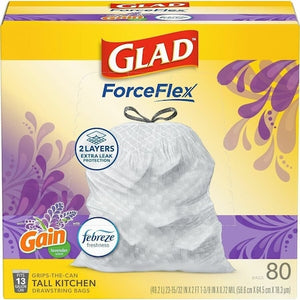
Examples in our catalog include the Glad 78902, a 13 gal bag at 24 x 27 in and 0.72 mil, listed as a pack of 80, and the ECOSAFE-6400 HB2432-6, a 13 gal bag at 24 x 32 in and 0.6 mil.
Trash bag size for bathrooms, desks and 5 gal buckets
- 4 gal: small bathroom and desk-side bins.
- 7-10 gal: under-desk bins and standard 5 gal pails. A 24 x 24 in bag is a typical size for this tier.
- Bathroom cans: many restroom cans fit 7-10 gal, but tall slim cans often need 12-16 gal. Measure one before you stock the whole building.
Trash bag sizes bigger than 13 gal
After 13 gal the usual steps are 20-30 gal (lobbies, break rooms), 33 gal (standard janitorial can), 40-45 gal and 55-60 gal. Moving up one step is the easiest way to stop mid-shift bag changes at a high-traffic can.
Commercial can liners: 33 to 60 gal
Commercial cans are where wrong sizing costs the most, because a full case of the wrong liner sits in the closet. These are the three families to know.
- 33 gal. The standard janitorial can. A 32 gal can takes a 33 x 39 in liner. The ECOSAFE-6400 HB3339-8 is a 35 gal bag at 33 x 39 in and 0.85 mil.
- 40-45 gal. Large indoor cans and many outdoor receptacles. The Mint-X MX4048HD C16 is a 45 gal rodent-repellent bag at 40 x 48 in and 16 micron.
- 55-60 gal. Large rolling cans and dumpster-style liners. The ECOSAFE-6400 HB4248-8 is a 55 gal bag at 42 x 48 in, and the Mint-X MX3858XHB is a 60 gal rodent-repellent bag at 38 x 58 in and 1.3 mil. 38 x 58 in liners are usually sold as 55-60 gal.
Bags above 60 gal exist for wheeled carts and other large containers. Order those by container dimensions, not gallon rating.
Trash bag thickness: mil vs micron, high-density vs low-density
Thickness decides whether a bag survives the contents. Two units are in use, and they are easy to mix up.
- Mil is one thousandth of an inch (0.001 in).
- Micron (shown as mic) is one thousandth of a millimeter (0.001 mm).
- 1 mil = 25.4 microns. So 0.72 mil is about 18 microns, and 1.3 mil is about 33 microns. A 16 micron liner is about 0.63 mil.
Resin type matters as much as thickness:
| Film type | Usually measured in | Behavior | Best for |
|---|---|---|---|
| High-density (HDPE) | Microns | Thin and stiff, strong in tension, can tear on sharp edges | Paper, office and light waste in big volumes |
| Low-density (LDPE, LLDPE) | Mil | Thicker and stretchier, resists punctures | Kitchen waste, wet waste, irregular and sharp items |
A 16 micron high-density liner and a 0.63 mil low-density liner have the same thickness, but they do not behave the same. Match the resin to the waste: high-density for dry paper waste, low-density or a higher gauge for food, bottles or anything with corners. If a bag splits at the seam or tears at the can rim, move up one thickness step before moving up one size.
Can liner vs trash bag, drawstring vs flat, and how many per case
Can liner vs trash bag. The terms overlap. A can liner is usually a bag built to line a specific can, sold on a roll in a case. A trash bag often means a boxed bag with drawstring ties for kitchens. Contractor bags are a heavier third category for demolition and cleanup. Buy by the can, not by the label.
Drawstring vs flat. Drawstring bags cinch closed and carry by the cord, which is why they dominate 13 gal kitchen use. Flat-bottom and star-seal liners come on a roll with no ties and are knotted by hand, the usual choice for 33 gal and larger commercial cans and for crews working off a cart.
How many bags come in a case. There is no standard. Small bags and thin film pack hundreds into a case, while large heavy liners pack far fewer. Read the pack line on each product page, then divide the case price by the count to compare cost per bag. The Glad 78902, for example, is listed as a pack of 80.
Stocking tips for a facility
Standardize on as few sizes as you can. A building that runs one 13 gal kitchen bag, one 33 gal liner and one 55-60 gal liner is easier to stock and train than one with eight. Put a size label on each can so the next person grabs the right roll.
To reorder fast by part number, use Quick Order. Businesses that buy liners monthly can set up Net-30 terms for approved business accounts. Orders of $79 or more ship free. Orders placed by 2 PM ET on a business day ship in 1-2 business days.
Our picks by size
- 13 gal kitchen: Glad 78902 (MPN 78902). 24 x 27 in, 0.72 mil, pack of 80.
- 33 gal janitorial can: ECOSAFE-6400 HB3339-8 (MPN HB3339-8). 33 x 39 in, 0.85 mil.
- 45 gal: Mint-X MX4048HD C16 (MPN MX4048HD C16). 40 x 48 in, 16 micron.
- 55-60 gal: ECOSAFE-6400 HB4248-8 (MPN HB4248-8) and Mint-X MX3858XHB (MPN MX3858XHB). 42 x 48 in and 38 x 58 in.
Browse every size in Can Liners, or see the wider Janitorial Supplies range.
Shop the products in this guide
-
 Pack of 80
$37.38
$0.47 / bagShips in 1-2 business days
In stock
-
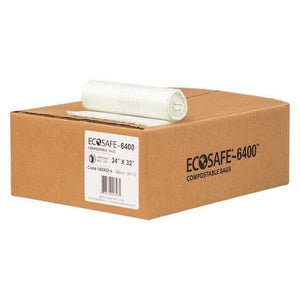
$137.99
Ships in 1-2 business days
In stock
-
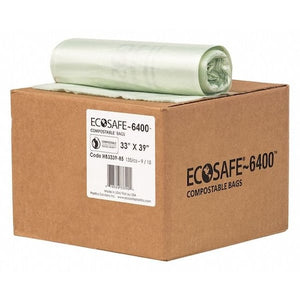
ECOSAFE-6400
35 gal Trash Bags, 33 in x 39 in, Extra Heavy-Duty, 0.85 mil, Green
MPN HB3339-8
- MPN: HB3339-8
$129.59
Ships in 1-2 business days
In stock
-

Mint-X
45 gal Rodent-Repellent Trash Bags, 40 in x 48 in, Heavy-Duty, 16 micron, Clear
MPN MX4048HD C16
- MPN: MX4048HD C16
$99.11
Ships in 1-2 business days
In stock
-
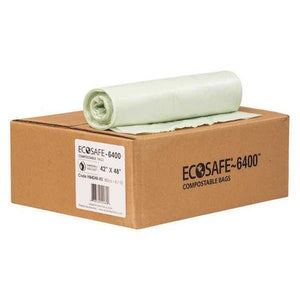
ECOSAFE-6400
55 gal Trash Bags, 42 in x 48 in, Extra Heavy-Duty, 0.85 mil, Green
MPN HB4248-8
- MPN: HB4248-8
$127.19
Ships in 1-2 business days
In stock
-
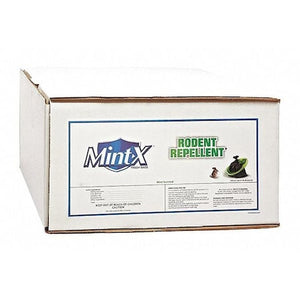
Mint-X
60 gal Rodent-Repellent Recycled Trash Bags, 38 in x 58 in, Super Heavy-Duty, 1.3 mil, Black
MPN MX3858XHB
- MPN: MX3858XHB
$58.49
Ships in 1-2 business days
In stock

Frequently asked questions
What trash bag size do I need?
Match the bag to your can in two steps. Note the can gallon rating, then check the bag width and length in inches. Divide the can circumference by 2 for the width, and add the can height, half the bottom diameter and about 4 in of overhang for the length. If the gallon rating is missing, measure.
What are standard trash bag sizes?
Common sizes are 4 gal, 7-10 gal, 13 gal (tall kitchen), 20-30 gal, 33 gal, 40-45 gal and 55-60 gal. Typical dimensions run from about 17 x 18 in for 4 gal up to 38 x 58 in for 60 gal. Exact dimensions vary by maker, so confirm width and length on the product page.
What trash bag size fits a 32 gallon can?
A 32 or 33 gal can usually takes a 33 x 39 in liner, which is sold as a 33 to 35 gal bag. Some makers list the same bag by a slightly different gallon number, so rely on the dimensions. If your can is tapered or has a wide rim, measure it before ordering a full case.
What is the largest trash bag size?
Standard commercial can liners top out around 55 to 60 gal, such as 38 x 58 in. Wheeled carts and roll-off style containers use larger liners, so check the container size and order by dimensions rather than by gallons. Contractor bags are thicker but sit in the same gallon range.
What size trash bag fits a 5 gallon bucket?
A 7-10 gal bag, commonly 24 x 24 in, fits a standard 5 gal pail with room to fold over the rim. A pail about 12 in across and 14 in tall needs a bag about 19 in wide and 24 in long once you add the overhang. A 4 gal bag is usually too short.
What is the difference between mic and mil on can liners?
Both measure film thickness. A mil is 0.001 inch, and a micron (mic) is 0.001 millimeter, so 1 mil equals 25.4 microns. Low-density liners are usually sold in mil, high-density liners in microns. Compare like with like by converting, so 16 microns is about 0.63 mil.
Guide
Grinding Wheel Types: Type 1, 27, Flap Discs and More
Grinding wheel types explained: Type 1, 27, 29, flap discs and wire wheels, plus grains, grit, arbor size...
Guide
Socket Set Sizes: SAE and Metric Chart
Socket set sizes in SAE and metric, with mm equivalents, drive sizes and 6-point vs 12-point.
Safety
Cut-Resistant Glove Levels: ANSI A1 to A9 Explained
Cut resistant gloves levels A1 to A9 explained: match the level to your task, read the ratings, compare...
New guides and deals by email
Buying guides, new products and deals for US businesses.